


What Is Freeze Dried Fruit? How It’s Made, How Long It Lasts, and What Buyers Need to Know
If you’ve come across freeze-dried fruit as a potential ingredient or product for your business, you’ve probably noticed one thing: everyone describes it differently. Some call it the premium preservation method. Others say it’s too expensive for most applications. A few just call it “the crunchy stuff.”
None of those answers are wrong. But none of them are complete either.
This guide covers what freeze-dried fruit actually is, how the process works, what it genuinely preserves and what it doesn’t, and what the whole thing means if you’re sourcing it in bulk.
What Freeze-Dried Fruit Actually Is
Freeze-dried fruit is fresh fruit from which nearly all moisture has been removed, not through heat, but through a low-temperature vacuum process called sublimation.
The result is a product that is lightweight, shelf-stable, and visually close to fresh fruit. The color holds. The flavor concentrates. The structure stays largely intact, depending on the fruit and how it was prepared.
It is not the same as dehydrated fruit. The process is different, the outcome is different, and the applications are different. More on that shortly.
What makes freeze-dried fruit commercially interesting, specially for food manufacturers, snack brands, and distributors, is the combination of long shelf life, no refrigeration requirement, and a sensory profile that heat-dried alternatives struggle to match.
How Freeze-Dried Fruit Is Made
The process has three stages. Understanding them is useful because each one directly affects the quality of what ends up in your supply chain.
Stage 1 — Rapid Freezing
The fruit is frozen quickly, typically to temperatures between -40°C and -50°C. The speed matters. Rapid freezing creates smaller ice crystals inside the fruit’s cells, which causes less structural damage. Slow freezing does the opposite, larger crystals, more cell rupture, and worse texture in the final product.
This is one reason why processing quality matters as much as raw material quality. Good fruit, frozen too slowly, still produces a mediocre end product.
Stage 2 — Sublimation (Primary Drying)
This is the stage that separates freeze drying from every other preservation method.
Inside a vacuum chamber, pressure is reduced significantly. At low enough pressure, ice converts directly to water vapor, bypassing the liquid stage entirely. The ice inside the frozen fruit turns straight to gas and is extracted from the chamber.
A useful way to picture it: ice left in a freezer slowly disappears without leaving any water behind. That’s sublimation. Freeze drying applies the same principle under controlled industrial conditions.
Because no heat is involved, the fruit’s natural pigments, aromatic compounds, and heat-sensitive vitamins are not degraded in the process. This is why freeze dried strawberries stay red and taste like strawberries, while oven dried strawberries often come out darker and carry a bit cooked note.
Stage 3 — Secondary Drying (Desorption)
After sublimation removes the bulk of the moisture, a small amount remains chemically bound to the fruit. This stage removes it by carefully raising the temperature — still low by conventional processing standards — until moisture content reaches approximately 1–3%.
This final step is what determines shelf life. The lower the residual moisture, the longer the product remains stable. A product that cuts corners here will degrade faster in storage, regardless of how good the packaging is.
What the Freeze Drying Process Actually Preserves and What It Doesn’t
Freeze drying has a strong reputation. Some of it is earned. Some of it is overstated.
What is genuinely preserved:
Color holds better than in any heat-based drying method. Natural pigments, the anthocyanins that make strawberries red, the carotenoids in mango, are heat-sensitive and degrade quickly during conventional drying. Without heat exposure, they stay largely intact.
Flavor is more concentrated and truer to fresh fruit. The volatile aromatic compounds responsible for how fruit smells and tastes are not cooked off during processing. When you open a bag of well-produced freeze dried mangos, they smell like fresh mangoes.
Nutritional profile is preserved better than most drying methods. Heat-sensitive vitamins, particularly vitamin C, survive freeze drying at significantly higher levels than they survive dehydration.
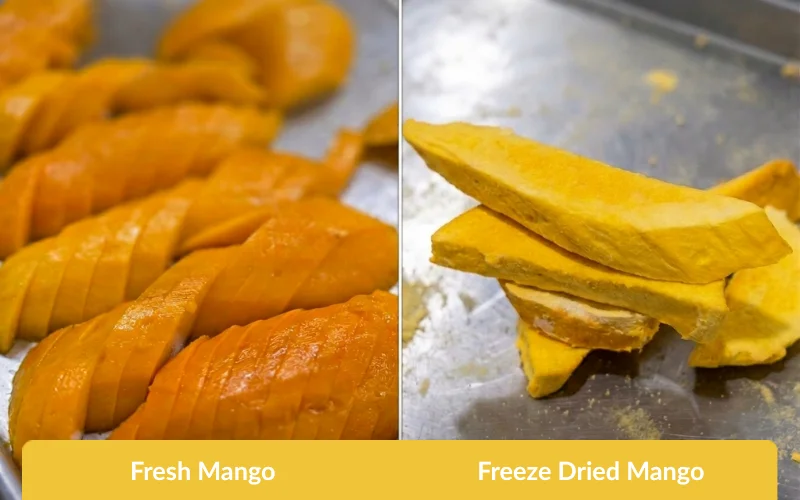
What changes:
Texture becomes crisp and light rather than fresh and juicy. For snack inclusions and premium cereal, this works well. For some other applications, it doesn’t. Worth knowing before placing a sample order.
Weight drops significantly — freeze-drying removes up to 90% of the original fresh weight, which is mostly water. This affects cost comparisons. A kilogram of bulk freeze-dried fruit represents a much larger volume of original fruit than a kilogram of fresh or dehydrated alternatives.
Cost per kilogram is higher than dehydrated fruit. The process takes longer, requires more energy, and demands more expensive equipment. That cost premium is real and doesn’t disappear.
And one thing freeze-drying cannot fix: poor raw material quality. Fruit that is underripe, over-mature, or poorly handled going in comes out as freeze dried fruit with those same problems. The process preserves and does not improve anyway.
Freeze Dried vs Dehydrated Fruit, What’s the Difference?
This question comes up in almost every sourcing conversation, so it’s worth a direct answer here.
Freeze-dried and dehydrated fruit are not the same product. The process is different, the outcome is different, and the right choice depends entirely on your application.
Dehydrated fruit is made by heat — warm air applied over an extended period, typically between 50°C and 75°C. The result is a chewier, darker product with residual moisture content around 10–20%. Freeze-dried fruit skips the heat entirely, which is why it preserves color, flavor, and structure better. The trade-off is cost: freeze-dried runs higher per kilogram.
There’s also a weight difference worth knowing. Freeze-drying removes up to 90% of original water content — significantly more than heat-drying. That affects shipping economics, storage space, and how you compare prices between the two formats.
Neither is universally better. The right choice depends on your application, your budget, and what your end product actually needs.
The full comparison — including a practical guide for deciding which format suits your production line — is covered separately. [Freeze-Dried vs Dehydrated Fruit: A Practical Guide for Bulk Buyers →]
How Long Does Freeze Dried Fruit Last
Shelf life is one of the most practically important questions for any bulk freeze dried fruit buyer, and it’s also one of the most inconsistently answered. The correct answer is, it depends on packaging quality and storage conditions more than almost anything else.
In sealed, moisture-barrier packaging under ambient conditions: most freeze dried fruit retains quality for 12 to 25 years. Some products are certified for longer under ideal conditions.
Once packaging is opened: shelf life drops considerably. Depending on humidity and temperature, you’re typically working with 6 to 18 months before quality degrades meaningfully. Moisture is the primary enemy, it reverses the preservation that the entire process was designed to achieve.
For bulk warehouse storage: a cool, dark, dry environment is sufficient. Refrigeration is not required and adds unnecessary cost. What matters is consistent temperature — avoid locations with significant fluctuation — and protection from moisture exposure during handling and repackaging.
One thing worth noting for distributors: the weight difference between fresh and freeze dried fruit is significant. Freeze-drying removes up to 90% of the original water weight. This affects both logistics cost per unit of nutritional value and how buyers should think about pricing comparisons.
What Freeze-Dried Fruit Is Used for in Food Manufacturing
The range of applications is wider than most buyers initially expect.
Snack manufacturing uses freeze-dried fruit as standalone snacks, coated inclusions, and mixed components. The crisp texture and strong visual quality support premium positioning in a way that heat-dried alternatives generally cannot match.
Cereal and granola is one of the highest-volume applications globally. When you see bright, visually intact strawberry or raspberry pieces in a premium granola, pieces that still look like real fruit, those are almost always freeze dried. The color and structure hold through packaging and shelf life in a way that dehydrated alternatives do not.
Confectionery and chocolate uses freeze-dried fruit pieces and powders as inclusions, coatings, and natural colorants. Freeze-dried strawberries in particular are widely used in chocolate products because of their color intensity and the fact that their low moisture content doesn’t interfere with the chocolate’s structure.
Functional beverages and supplements use freeze-dried powder formats. The powder dissolves cleanly, retains flavor without heat processing, and provides the natural fruit color that clean-label beverage brands increasingly require. Strawberry powder, mango powder, and beetroot powder are among the most commonly sourced.
Ready meals and soups use freeze dried vegetables and some fruit components that rehydrate cleanly during cooking. The rehydration behavior of freeze-dried ingredients, returning close to the original texture when water is reintroduced, makes them particularly well-suited to this application.
What to Check Before Sourcing Freeze Dried Fruit in Bulk
This section is not about any specific supplier. It is a practical checklist for any buyer evaluating freeze-dried fruit for commercial use.
This is a practical checklist for evaluating any supplier.
Moisture content specification. Ask for the technical data sheet. Residual moisture should sit in the 1–3% range for most fruits. Higher than that suggests the secondary drying stage was not completed properly — which directly affects shelf life.
Color grading standards. Understand how the supplier grades color and ask for samples from multiple batches. Consistency matters if your product depends on visual quality.
Packaging formats. Confirm the supplier offers bulk packaging suited to your use — typically 1kg to 4kg moisture-barrier bags for manufacturing and ingredient applications — and whether private label or white label options are available if relevant.
MOQ and trial availability. A supplier confident in their product should offer trial volumes before you commit to full container quantities. If they won’t let you test before you commit, that’s worth noting.
Seasonal supply management. Some fruits are strictly seasonal. Ask specifically how the supplier handles continuity for seasonal crops. Serious producers stockpile during peak harvest windows to maintain consistent year-round supply.
A Note on Iranian Freeze Dried Fruit
Iran is one of the world’s most significant producers of stone fruits, figs, apricots, and berries. The climate produces fruit with naturally concentrated sugar content and intense flavor profiles that carry through into the freeze-dried end product.
Mivana sources and processes in Iran, supplying bulk freeze dried fruit, bulk dehydrated fruit, vegetables, and powders to importers, distributors, and food manufacturers internationally. If you’re evaluating Iranian supply as part of your sourcing strategy, understanding the raw material is the right starting point — and that starts with the fruit itself.
Frequently Asked Questions
What is freeze dried fruit?
Freeze dried fruit is fresh fruit from which moisture has been removed through a low-temperature vacuum process called sublimation — freezing the fruit and converting the ice directly to vapor without heat. The result is a lightweight, shelf-stable product that retains the color, flavor, and most of the nutritional profile of fresh fruit.
What is the shelf life of freeze dried fruit?
In properly sealed moisture-barrier packaging under ambient storage conditions, freeze dried fruit retains quality for 12 to 25 years. Once opened, shelf life reduces to 6–18 months depending on humidity and temperature. The primary risk is moisture exposure — once the packaging seal is compromised, degradation accelerates.
How should freeze dried fruit be stored in bulk?
Bulk freeze dried fruit should be stored in a cool, dry, dark environment away from direct light and humidity. Refrigeration is not required but extends shelf life further for long-term warehouse storage. Temperature consistency matters more than low temperature — significant fluctuation accelerates quality degradation even in sealed packaging.
What is the difference between freeze dried and dehydrated fruit?
Freeze-drying uses sublimation at very low temperatures, preserving color, texture, and flavor more effectively. Dehydration uses heat, producing a chewier product with a slightly cooked flavor and higher residual moisture. Freeze dried carries a higher price per kilogram. The right choice depends on your application requirements, not on which method sounds better.
What is freeze dried fruit used for in food manufacturing?
Freeze dried fruit is used as an ingredient in snack production, premium cereals and granola, confectionery, chocolate, functional beverages, supplement powders, and ready meals. It is available in whole pieces, slices, crumbles, and powder formats. The specific format depends on the production process and end product application.
If You’re Sourcing Freeze Dried Fruit in Bulk
We supply bulk freeze dried vegetables, fruits, powder and dehydrated fruit from Iran, with white label and private label options available for brands and distributors.
If you’re evaluating freeze dried fruit for your product line or import catalog, explore our freeze dried fruit rangeor get in touch about bulk pricing and samples.
No pressure. Just the information you need to make the right decision for your business.